
A generator rotor must operate under considerable mechanical, thermal and electrical stress to maintain a stable power supply. Over time, continuous operation, insulation deterioration, vibration and overheating can affect its condition and performance. Professional rotor repair services help identify these problems, restore damaged components and reduce the risk of unexpected equipment failure. Timely repairs can also extend the working life of a generator, maintain operating efficiency and prevent the high costs associated with premature rotor replacement.
Why Generator Rotors Require Regular Inspection
The rotor is a central component of an electrical generator. It rotates within the stator and produces the magnetic field required for electricity generation. Its condition directly affects the generator’s ability to operate reliably.
Several factors can contribute to rotor deterioration:
- Excessive heat: High operating temperatures can damage insulation, weaken electrical connections and affect winding integrity.
- Mechanical vibration: Imbalance, misalignment and worn bearings can create vibration that gradually damages rotor components.
- Insulation failure: Ageing insulation, contamination and electrical stress can lead to short circuits or ground faults.
- Material fatigue: Repeated thermal expansion and mechanical loading can cause cracks or structural weaknesses.
- Corrosion: Moisture and environmental contaminants can damage exposed metal surfaces and electrical connections.
Regular inspections help maintenance teams identify these issues before they develop into serious failures. Inspection intervals should reflect the generator’s operating hours, service conditions and manufacturer recommendations.
Common Rotor Problems That Affect Generator Operation
Rotor faults can develop gradually or appear suddenly following an electrical or mechanical incident. Recognising early warning signs helps maintenance teams plan corrective work before the damage spreads.
Winding damage: Rotor windings may experience insulation breakdown, loose connections or conductor damage. These faults can affect electrical performance and create localised overheating.
Rotor imbalance: Uneven mass distribution can cause excessive vibration during operation. If left uncorrected, imbalance may place additional stress on bearings, shafts and other rotating components.
Shaft damage: Excessive loading, fatigue and alignment problems can contribute to shaft wear, surface damage or cracking. Shaft defects require careful assessment because they can affect the mechanical stability of the entire assembly.
Retaining ring deterioration: Retaining rings hold rotor windings in position under high centrifugal forces. Cracks, corrosion or material deterioration can compromise their ability to secure the windings.
Insulation deterioration: Ageing insulation may lose its electrical strength, increasing the likelihood of short circuits and other electrical faults.
Accurate diagnosis is necessary because several rotor problems can produce similar symptoms, including unusual vibration, increased temperatures and reduced generator output.
How Professional Rotor Repair Services Restore Equipment
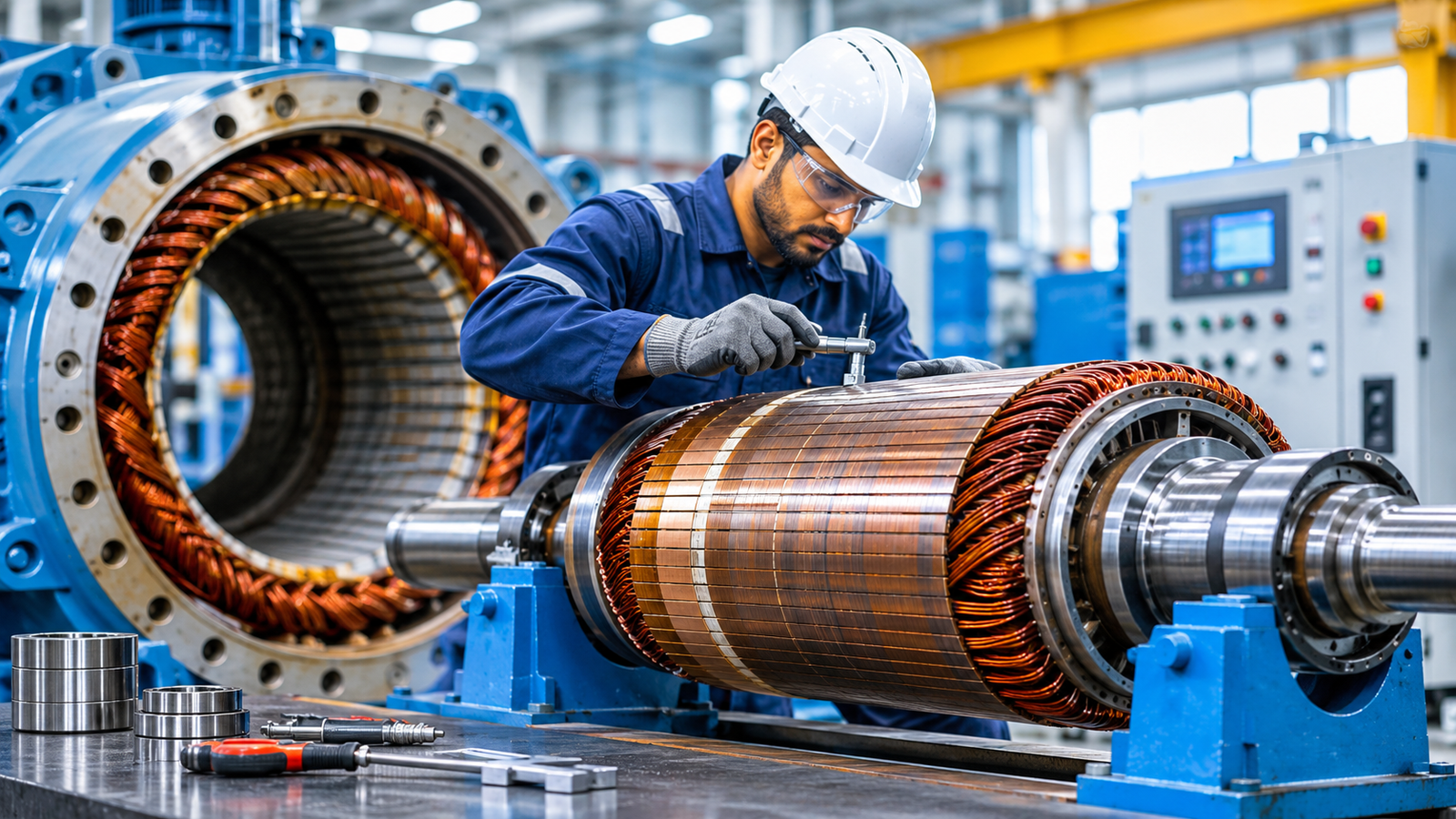
Repair work should begin with a detailed assessment of the rotor’s mechanical and electrical condition. A suitable repair programme depends on the type of generator, the extent of damage and the operating requirements of the equipment.
A typical repair process includes the following stages:
1. Initial inspection and fault identification
Technicians examine the rotor for visible damage, corrosion, cracks, loose components and signs of overheating. They may also review operating records, vibration readings and previous maintenance reports to understand the equipment’s condition.
2. Electrical testing
Electrical assessments help identify insulation deterioration, winding faults and potential short circuits. Depending on the equipment, testing may include insulation resistance measurements, winding resistance checks and specialised diagnostic procedures.
3. Mechanical assessment
The shaft, retaining rings, coupling surfaces and other mechanical components are inspected for wear, deformation and structural damage. Dimensional measurements help establish whether components remain within acceptable tolerances.
4. Repair and component restoration
Depending on the findings, the repair programme may involve rewinding, insulation replacement, shaft restoration, component machining, surface treatment or replacement of damaged parts. Repairs should follow suitable engineering specifications and material requirements.
5. Balancing and final testing
Once repairs are complete, the rotor may undergo dynamic balancing to reduce vibration during operation. Final electrical and mechanical checks help confirm that the restored assembly meets the required performance criteria.
The Role of Power Generator Rotor Repair in Reliable Electricity Production
Large generators are designed to operate for extended periods, often under demanding conditions. A rotor fault can interrupt electricity production, affect connected equipment and create significant maintenance expenses.
Power generator rotor repair addresses defects that may otherwise lead to extended equipment downtime. The work can include correcting winding faults, restoring damaged surfaces, repairing mechanical components and checking rotor balance.
The repair requirements differ between generator types. Steam turbine generators, gas turbine generators, hydroelectric generators and industrial power units may use different rotor designs and operating arrangements. Each requires an assessment based on its construction and service conditions.
A properly planned repair can offer several operational advantages:
- Reduced risk of recurring electrical and mechanical faults.
- Improved rotor stability during operation.
- Lower likelihood of unplanned generator shutdowns.
- Extended service life of existing equipment.
- Better control over maintenance and replacement costs.
Repair decisions should also consider the rotor’s remaining service life. In some cases, extensive damage may make replacement more practical than restoration.
Choosing a Suitable Rotor Repair Company
Selecting a repair provider requires more than comparing service prices. Generator rotors are precision-engineered components, so repair work demands technical knowledge, suitable facilities and careful quality control.
Businesses responsible for power generation equipment should assess several factors before appointing a contractor.
Experience with generator types: The repair provider should have experience working with the specific generator design, rotor dimensions and operating conditions involved.
Testing facilities: Access to suitable electrical testing equipment, precision measuring instruments and balancing facilities supports accurate fault diagnosis and verification.
Engineering capabilities: A capable contractor should be able to assess complex damage and recommend appropriate repair procedures rather than applying the same method to every rotor.
Quality assurance: Inspection records, material traceability, repair documentation and test reports help establish whether the work meets the required specifications.
Safety procedures: Rotor handling, lifting, machining and testing involve significant risks. The contractor should follow appropriate workplace safety procedures and equipment-specific requirements.
A clear repair scope and technical assessment also help prevent misunderstandings about the work required, expected turnaround times and final acceptance criteria.
What Affects Rotor Repair Costs and Turnaround Time?
Repair expenses depend on the generator’s design, rotor size, fault severity and availability of replacement materials. A minor surface restoration may require considerably less work than a complete rewinding or major shaft repair.
Other factors that influence costs include:
- Labour and specialist engineering requirements.
- Rotor disassembly and reassembly.
- Replacement insulation and other components.
- Machining and balancing requirements.
- Electrical testing and inspection.
- Transportation and handling of large rotor assemblies.
The repair provider should prepare a technical assessment before confirming the scope and estimated completion time. This helps maintenance managers compare repair costs with the expense of purchasing a replacement rotor.
Preventive Maintenance Can Reduce Future Rotor Damage
Although some rotor faults develop unexpectedly, a planned maintenance programme can reduce the likelihood of major failures.
Maintenance teams should monitor operating temperatures, vibration levels, electrical readings and bearing conditions. Changes in these measurements may indicate developing problems that require further investigation.
Periodic inspections should also cover winding insulation, shaft surfaces, retaining rings and other components exposed to mechanical or thermal stress. Maintenance records allow engineers to compare equipment performance over time and identify recurring defects.
Operators should follow manufacturer recommendations and establish inspection schedules based on actual operating conditions. Generators exposed to frequent load changes, harsh environments or extended operating hours may require closer monitoring.
Making Informed Decisions About Generator Rotor Restoration
Generator rotor maintenance requires accurate diagnosis, appropriate engineering methods and reliable quality checks. Early identification of winding, insulation and mechanical defects can prevent more extensive damage and reduce interruptions to electricity production.
Working with an experienced rotor repair company helps equipment owners assess the condition of their generators and determine the most suitable restoration options. A qualified repair provider can also explain the expected service life, testing requirements and limitations of the completed work.
Investing in properly assessed repairs allows businesses to maintain existing generator assets while making informed decisions about future maintenance, refurbishment or replacement.