ByJohn A
Sustainable Ship Design and the Push for Greener Maritime Transport
Sustainability has become a major influence on ship design as the maritime industry looks for ways to reduce fuel consumption, air emissions, and environmental impact. Ships transport a large share of global trade, so even modest improvements in vessel efficiency can have significant benefits when applied across fleets. Modern designers are therefore focusing on hull efficiency, alternative fuels, energy-saving technologies, lightweight materials, and smarter operating systems.
Reducing Resistance Through Hull Optimization
One of the most direct ways to improve sustainability is to reduce resistance. A ship that moves through water more efficiently requires less propulsion power. During ship design, naval architects optimize hull shape, bow geometry, stern form, and appendages to reduce friction and wave-making losses. Computational fluid dynamics allows designers to compare many variations before construction begins, helping them identify more efficient forms without relying only on trial and error.
Propulsion Efficiency and Energy-Saving Devices
Propulsion efficiency is another major area of improvement. Conventional fixed-pitch propellers remain common, but modern vessels may use controllable-pitch propellers, podded propulsion, optimized rudders, ducts, fins, or other energy-saving devices. These systems aim to recover energy from the water flow or improve the interaction between the hull, propeller, and rudder. Even small percentage gains can lead to meaningful fuel savings over years of operation.
Alternative Fuels and Their Design Challenges
Alternative fuels are changing ship design as well. Liquefied natural gas, methanol, biofuels, hydrogen, ammonia, and other low-carbon options are being considered for different vessel types. Each fuel has unique storage, safety, handling, and machinery requirements. For example, some fuels need larger tanks than conventional marine fuel because they contain less energy per unit volume. Others may require cryogenic systems, special ventilation, gas detection, or additional fire protection.
Battery-electric and hybrid propulsion are also becoming more relevant, especially for ferries, harbor vessels, offshore support ships, and ships operating on shorter routes. Batteries can reduce fuel use and local emissions, but they add weight and require significant space, cooling, fire protection, and power-management systems. Ship design must therefore balance environmental benefits with practical limitations such as range, charging infrastructure, and vessel payload.
Renewable Assistance and Lightweight Construction
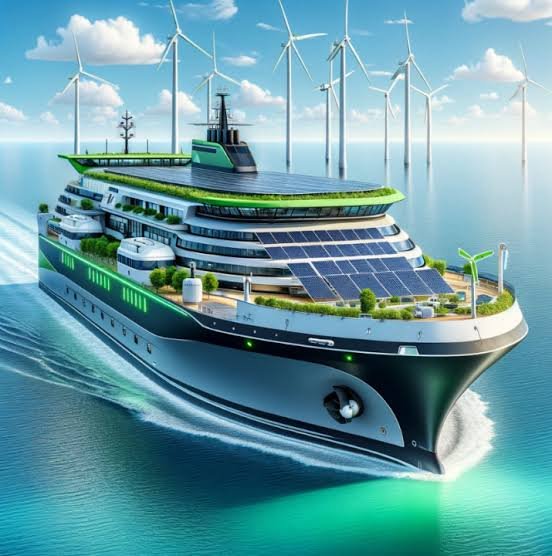
Renewable energy technologies are being explored too. Wind-assisted propulsion systems, including rotor sails, rigid sails, and towing kites, can reduce engine load under suitable conditions. Solar panels may provide auxiliary electrical power, although available deck area limits their contribution on many ships. Designers need to integrate these systems without interfering with cargo operations, visibility, stability, or safety.
Weight reduction is another useful strategy. A lighter vessel may need less power to move, but materials must still provide adequate strength, fire resistance, fatigue performance, and durability. Aluminum and composite materials are widely used in high-speed craft, ferries, and specialized vessels, while advanced steels can reduce structural weight in larger ships. Sustainable ship design evaluates the full life-cycle impact rather than focusing only on initial material weight.
Pollution Prevention and Onboard Energy Efficiency
Waste management and pollution prevention are also part of environmental design. Ships generate sewage, gray water, oily water, garbage, exhaust emissions, and sometimes cargo-related waste. Modern vessels incorporate treatment systems, holding tanks, separators, monitoring equipment, and safe discharge arrangements. Tankers and chemical carriers require especially careful systems to reduce the risk of accidental pollution.
Energy efficiency extends beyond propulsion. Heating, ventilation, air conditioning, refrigeration, lighting, pumps, and hotel services can consume significant power. Efficient motors, variable-speed drives, heat-recovery systems, improved insulation, and intelligent control systems can lower demand. Waste heat from engines may also be reused for heating or electrical generation.
Read Also: The Future of Decentralized Online Platforms
Digital Energy Management and Life-Cycle Planning
Digital technologies support sustainable ship design by improving how energy systems are monitored and controlled. Sensors can track fuel consumption, trim, engine load, weather conditions, and equipment performance. This data can help operators choose more efficient speeds and routes. Designers can also create digital models that estimate how the vessel will perform across a range of operating conditions.
Life-cycle thinking is becoming increasingly important. A ship may operate for decades, so designers must consider maintenance, upgrades, recycling, and future regulations. A vessel built today may need to use different fuels or technologies later in its life. Flexible machinery spaces, adaptable fuel systems, and reserved areas for future equipment can make later conversion easier.
A Complete Approach to Sustainable Ship Design
Sustainable ship design is therefore not based on one technology. It combines efficient hulls, improved propulsion, cleaner fuels, smarter energy systems, and responsible environmental management. As maritime regulations become stricter and fuel costs remain important, these design choices will play a growing role in the competitiveness and environmental performance of future fleets.