
Understanding the Importance of Industrial Odour Management
Air quality is an important consideration for industrial facilities, commercial buildings, laboratories, and waste management operations. Various industrial processes release gaseous contaminants that can create unpleasant odours and affect the quality of indoor and surrounding environments. These emissions may contain volatile organic compounds (VOCs), sulphur compounds, ammonia, and other chemical substances that require appropriate treatment.
Managing these contaminants involves more than simply circulating air or capturing visible dust particles. Conventional air filtration systems are primarily designed to remove particulate matter, whereas gaseous pollutants require specialised filtration technologies. An advanced odour control system helps address this requirement by treating contaminated air through chemical filtration and adsorption processes.
Effective odour management supports better indoor environmental conditions, improves workplace comfort, and helps industrial facilities manage air pollution concerns. Understanding the causes of odours and the available treatment technologies is essential when selecting an appropriate solution.
What Causes Unpleasant Odours in Industrial Environments?
Gaseous Emissions from Manufacturing Processes
Industrial manufacturing involves several processes that can release odorous gases into the surrounding environment. Chemical processing, pharmaceutical production, fertiliser manufacturing, petroleum refining, and textile operations may generate compounds with noticeable odours.
The specific pollutants depend on the raw materials, production methods, operating temperatures, and chemical reactions involved. Hydrogen sulphide, ammonia, sulphur dioxide, and various volatile organic compounds are among the substances that may require specialised treatment.
Identifying the composition of these emissions is an important first step in selecting an effective filtration system. Different chemical compounds have different properties, meaning that one filtration medium may not provide suitable treatment for every contaminant.
Wastewater and Waste Management Facilities
Wastewater treatment plants, sewage pumping stations, and waste management facilities can generate persistent odours during the handling and decomposition of organic materials.
Hydrogen sulphide and other sulphur-containing compounds are commonly associated with unpleasant smells in these environments. Their presence can create significant air quality concerns, particularly in enclosed or poorly ventilated spaces.
Odour management in these facilities requires systems capable of treating gaseous pollutants rather than relying exclusively on conventional ventilation or particulate filtration.
How Does an Industrial Odour Control System Work?
Understanding Chemical Filtration Technology
Chemical filtration is designed to remove gaseous contaminants through interactions between pollutant molecules and specialised filtration media. Depending on the media composition, these interactions may involve adsorption and chemisorption.
During adsorption, contaminant molecules are attracted to and retained on the surface of the filtration material. Chemisorption involves chemical reactions between the contaminant and the active substances present in the media, helping neutralise specific pollutants.
The selection of filtration media depends on the chemical characteristics of the gases being treated. Activated carbon, activated alumina, and chemically impregnated materials are commonly used in gas-phase filtration applications.
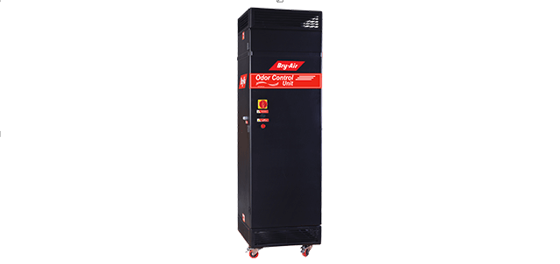
Bry-Air incorporates honeycomb chemical filtration technology into its odour control equipment to address gaseous pollutants responsible for unpleasant smells and indoor air quality concerns.
The Role of Honeycomb Filtration Media
Honeycomb filtration technology uses specially designed filter structures that allow contaminated air to pass through multiple channels containing active chemical media.
The honeycomb arrangement provides a defined airflow path and exposes gaseous contaminants to the filtration surface. This interaction supports the removal of selected pollutants while maintaining controlled airflow through the equipment.
Bry-Air’s system uses potassium permanganate-impregnated honeycomb filter media. The filter cassettes are constructed from stainless steel, supporting a durable and replaceable filtration arrangement.
The system is also designed with a low-pressure-drop configuration, which helps reduce the energy required to move air through the filtration equipment.
What Are the Benefits of Advanced Odour Control Units?
Improved Indoor Air Quality
Unpleasant odours and gaseous contaminants can affect the suitability of indoor environments for regular operations. Effective gas-phase filtration helps reduce selected airborne pollutants, supporting cleaner indoor air conditions.
Unlike basic air purifiers that primarily capture dust and other particulate matter, specialised chemical filtration systems address gaseous contaminants at the molecular level.
This distinction is particularly important in environments where chemical emissions are a major concern. Selecting suitable filtration media according to the pollutants present helps improve treatment effectiveness.
Energy-Efficient Filtration Performance
Energy consumption is an important consideration when operating industrial air treatment equipment. Systems with unnecessarily high resistance to airflow can increase the workload on fans and blowers.
A low-pressure-drop filtration design helps reduce this resistance, supporting more energy-conscious operation. However, actual energy consumption depends on several factors, including airflow requirements, fan selection, filter condition, and operating schedules.
Bry-Air’s honeycomb chemical filtration technology incorporates a low-pressure-drop design to support efficient air treatment.
Convenient Filter Replacement and Maintenance
Industrial filtration systems require regular inspection to maintain reliable performance. Over time, chemical media can become depleted as it interacts with gaseous contaminants.
Replaceable filter cassettes make maintenance more manageable by allowing the filtration components to be accessed and changed when required. Maintenance schedules should consider contaminant concentration, operating hours, airflow conditions, and manufacturer recommendations.
Monitoring filter condition and pressure drop can also help identify when servicing or media replacement is necessary.
Which Industries Require Specialised Odour Management Solutions?
Pharmaceutical and Chemical Manufacturing
Pharmaceutical and chemical manufacturing processes may involve solvents, reactive substances, and other chemical compounds that contribute to gaseous emissions.
Maintaining appropriate air quality is important in production and support areas where airborne contamination must be controlled. Gas-phase filtration can help manage selected odorous and chemical pollutants when the filtration media is matched to the application.
Sewage and Wastewater Treatment Plants
Sewage pumping stations and wastewater treatment facilities frequently encounter odorous gases generated during waste processing and decomposition.
Installing appropriate filtration equipment can help treat contaminated air in designated spaces and reduce the impact of unpleasant emissions. System selection should account for the concentration and chemical composition of the pollutants.
Animal Research Laboratories and Mortuary Facilities
Animal research laboratories and mortuary facilities may contain odorous gases associated with biological materials and chemical substances.
Formaldehyde vapours and other gaseous contaminants require particular attention in environments where chemical exposure is a concern. Specialised filtration systems can help manage these pollutants as part of a broader ventilation and workplace safety strategy.
What Factors Should Businesses Consider When Selecting Odour Control Equipment?
Identify the Type and Concentration of Pollutants
The first step in selecting an appropriate system is understanding the contaminants present in the air. Businesses should identify the chemical composition, concentration, temperature, and humidity of the incoming air.
This information helps determine which filtration media and treatment approach are suitable. A system designed for one group of gases may not provide effective treatment for another, making pollutant assessment essential.
Evaluate Airflow Capacity and Installation Requirements
The required airflow capacity depends on the size of the space, the rate of contaminant generation, ventilation requirements, and the intended treatment arrangement.
Bry-Air’s standard odour control system range covers 500 to 2,000 CFM. Businesses should assess their application requirements before choosing a suitable equipment configuration.
Installation planning should also consider ductwork, electrical connections, exhaust arrangements, available maintenance access, and integration with existing ventilation infrastructure.
Consider Filtration Standards and Maintenance
Filtration performance should be evaluated using relevant testing standards and application-specific requirements. Bry-Air identifies ASHRAE 145.2 and ISO 11155-2 testing for its honeycomb filter technology.
Businesses should also consider media replacement requirements, maintenance accessibility, operating conditions, and the availability of technical support.
Regular inspection is necessary to maintain filtration performance and ensure that the equipment continues to operate according to its intended specifications.
Why Is Advanced Gas-Phase Filtration Important for Modern Industries?
Industrial air quality management requires technologies capable of addressing different categories of airborne contaminants. While particulate filters capture dust and suspended particles, gaseous pollutants often require specialised chemical treatment.
Advanced gas-phase filtration provides a targeted approach by using application-specific media to adsorb or chemically neutralise selected contaminants. This makes it an important component of industrial air treatment strategies, particularly in facilities where odorous gases are generated continuously.
Modern filtration equipment also needs to balance treatment performance, airflow requirements, maintenance accessibility, and energy consumption. Selecting the right technology requires a detailed understanding of the operating environment and the chemical characteristics of the pollutants.
Manufacturers such as Bry-Air develop specialised filtration solutions that address these requirements through engineered chemical media and industrial air treatment systems.
Conclusion
Effective odour management is an important part of maintaining suitable air quality across industrial and commercial environments. Gaseous pollutants generated during manufacturing, wastewater treatment, chemical processing, and other operations require specialised treatment approaches that go beyond conventional particulate filtration.
An advanced odour control system uses chemical filtration technology to target selected gaseous contaminants through adsorption and chemisorption. Honeycomb filter arrangements, appropriate chemical media, controlled airflow, and replaceable filter cassettes contribute to effective system operation.
Businesses should evaluate pollutant composition, airflow capacity, filtration requirements, installation conditions, and maintenance needs before selecting suitable equipment. Bry-Air offers specialised odour control solutions designed for industrial and commercial applications.
For further information about filtration technology, product specifications, and application-specific requirements, businesses can connect with the technical team through the official Contact Us page.