ByJohn A
7 Questions to Ask Before Scheduling Platelet Rich Plasma Injection Near Me
Platelet rich plasma injections are used for accelerating healing in tendons, joints, muscles, and scalps. You need to choose a clinic that possesses the right credentials, adopts a good preparation protocol, and has skilled clinicians.
Key Takeaways
- Provider Expertise & Precision: Patients should ensure the practitioner is a licensed physician (MD or DO) trained in regenerative medicine who utilizes ultrasound guidance for accurate injection delivery.
- Candidacy Restrictions: PRP therapy is not suitable for everyone, particularly individuals with bleeding disorders, active infections, severe chronic conditions, or those taking blood thinners or NSAIDs.
- Treatment Timeline & Expectations: Most pain management protocols require 1 to 4 sessions spaced 2 to 6 weeks apart, with initial improvements typically appearing in 4 to 6 weeks and full results taking 4 to 6 months.
- Integrated Care & Safety: Mild side effects like swelling or localized pain are common and manageable, while combining PRP with physical therapy often provides the best long-term outcomes for orthopedic conditions.
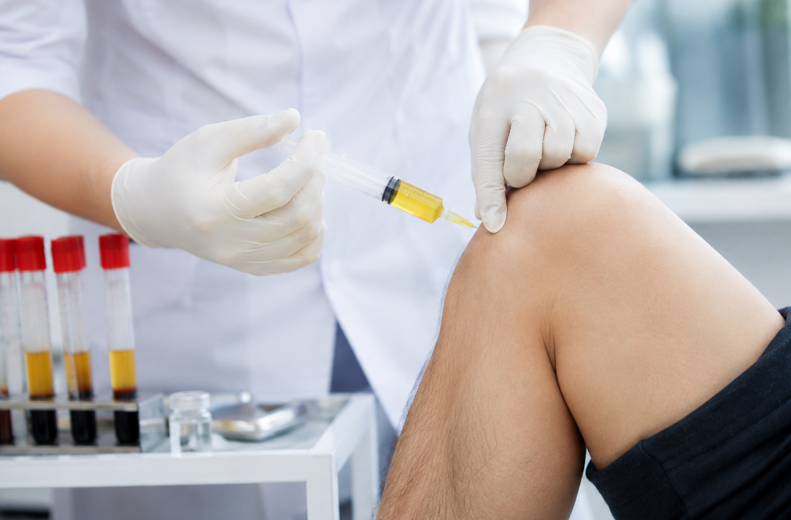
PRP therapy refers to an autologous treatment that repairs tissues and stimulates cell growth. In this process, blood is taken from the patient’s body, the healing platelets are concentrated, and are injected into the target treatment area. Patients need to choose the right clinic because results depend heavily on the provider’s expertise, preparation process, and injection precision.
In this article, we will state the top questions that you need to ask before scheduling your PRP injection.
What Questions Do You Need to Ask Before Scheduling PRP Injections?
Before you search for platelet rich plasma injection near me, and select a clinic, you need to be aware of several areas. Here are the top seven questions that need to be answered.
1. What are your Credentials and Experience with PRP Therapy?
Before you choose a clinic, you need to check their credentials and their experience in dealing with patients getting PRP injections. The main practitioner must be a licensed MD (Medical Doctor) or a DO (Doctor of Osteopathic Medicine).
You need to check whether the clinician is registered with a region-specific College of Physicians and Surgeons (like CPSBC in British Columbia, CPSO in Ontario, CPSA in Alberta, etc.). The practitioner must be trained in regenerative medicine instead of only general practice.
2. Do you Consider Ultrasound for the Injection?
What makes ultrasound guidance effective for PRP treatment (traitement prp) is that it elevates the precision and therapeutic efficiency of platelet rich plasma injections. This is very much required for orthopedic, musculoskeletal, and sports medicine applications.
The key benefits of using image guidance (ultrasound) to administer PRP injections are targeted delivery, tissue diagnostics and mapping, and risk reduction. Before you schedule an appointment, check whether the clinic considers this.
3. Am I a Good Candidate for PRP Therapy?
Just because PRP therapy has a range of applications, that does not mean that anyone can be given this treatment. People with bleeding disorders (like hemophilia or platelet dysfunction), active infection at the treatment site, or severe health problems (uncontrolled diabetes or chronic liver disease) are not a good fit for this therapy.
PRP injections are not administered if you are on NSAIDs or blood thinners. Interact with your doctor to know whether you are a suitable candidate for this treatment.
4. How many PRP Sessions do I Require and what will be the Gap between Two Sessions?
You need to be aware of whether your condition needs a single injection or a series of treatment. Get a good understanding of this before you select a clinic.
Around 1 to 4 PRP sessions are recommended when the therapy is considered for pain management. The interval between sessions is 2 to 4 weeks (and up to 4 to 6 weeks). Ask your clinic beforehand.
5. When will I see the Results?
The initial signs of improvement appear within 4 to 6 weeks. You can see noticeable pain relief or improved joint movement within 4 to 6 months. Being aware of the possible timeline sets realistic expectations and you know that there will be no immediate relief in PRP treatment (traitement prp).
6. What are the Side Effects of PRP Therapy and How can they be Managed?
Generally, PRP therapy is safe. As it uses your own blood, you can see certain mild side effects like pain at the injection site, swelling, bruising, etc. In rare cases, you might experience infection (at the injection site), blood clots, nerve injury, etc.
The mild side effects are managed resting the treated area, applying cold compresses for 15 minutes, and staying hydrated. Asking this question will make you knowledgeable of the side effects and probable management ways.
7. Will PRP be Combined with Physical Therapy?
The combination of PRP and physical therapy yields good outcomes for orthopedic conditions. This is because the former one offers the biological spark for tissue regeneration and the later one guides the structural remodeling. Ask your doctor whether there is any need or scope for a combination.
Conclusion
Before seeking PRP injections, you need to be aware of the practitioner’s credentials, consideration of ultrasound, expected results timeline, and possible side effects. A well-known provider ensures quality outcomes.
Planning to Obtain PRP Injections?
Find a renowned pain management clinic in Canada. Interact with a specialist and get aware of the treatment. Schedule an appointment, get it done, and say goodbye to pain.